Guided Tour
A SENTENCE WITH FOUR WOR(L)DS
With Miriam Farcaș, Vladiana Ghiulvessi, Ingrid Farcaș & Victoria Sadovnic
Curated by Norbert Filep
The burden of expression becomes palpable when embodiment, in one form or another, fails to find the means necessary to materialize into a coherence capable of fusing the worldly and the ideational into a single entity.
A multitude of formulas hovers within the mental space; worldly knowledge and reminiscences of matter stored in the neuronal archive trigger an extended chain of operations in the pursuit of the most adequate mode of articulation. Meaning proves to be the central element of communication. Here, reason actively partakes in the common play between logic and language.
Through the image of letters—generators of meaning and sense—text merges with the idea. Imagination becomes the process by which the inquisitive reader deciphers the outcome of this interplay. The title assumes the same task, activating the imaginative process through play, contemplation, and constructs that articulate the overall structure of the exhibition. The term sentence effectively operates as the exhibition’s skeleton, the structure that recomposes the magical thinking of the image underlying the four artistic practices brought together in A sentence with four wor(l)ds.
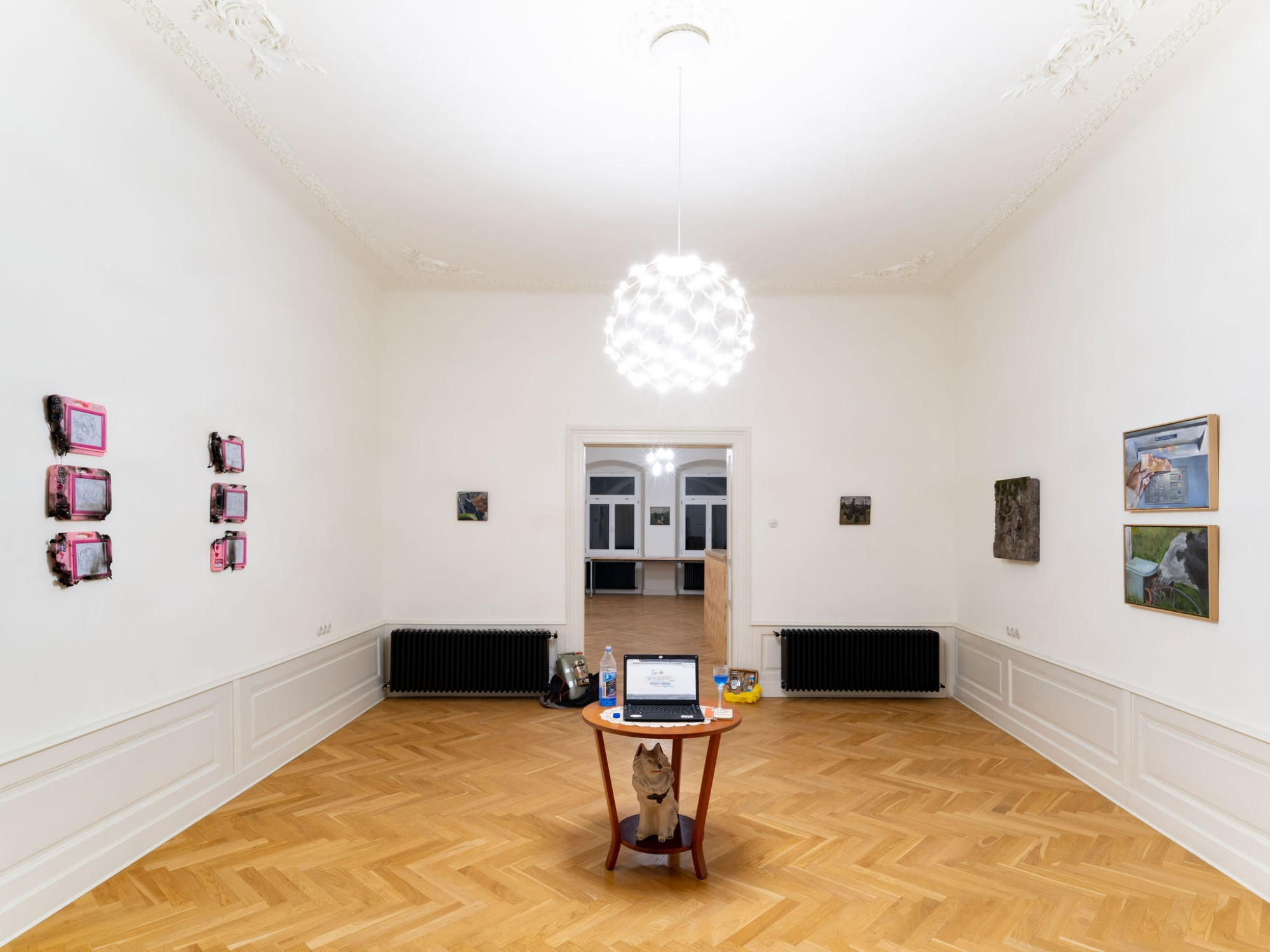
Translated into the exhibition space, this structure of the sentence becomes visible through the distinct distribution of the four practices. At first glance, the eye registers an apparently fragmented structure, defined by the variety through which the four artists assert themselves. Figuration and abstraction place the exhibition space under tension, forming a proposition of Dadaist inflection, represented by the juxtaposition of seemingly random words.
In this sense, Vladiana Ghiulvessi’s geometric abstraction appears as an exotic adjective that closes the sentence. Her paintings reconfigure the traditional quadrilateral of the canvas, offering multiple ways of reading the new planes constructed through linear variations. The line thus becomes a central element in the remixing of bidimensionality into new three-dimensional optical possibilities, intensified by the intersection of chromatic thinking with linear graphic expression and with volumes cut from a vectorial horizon.
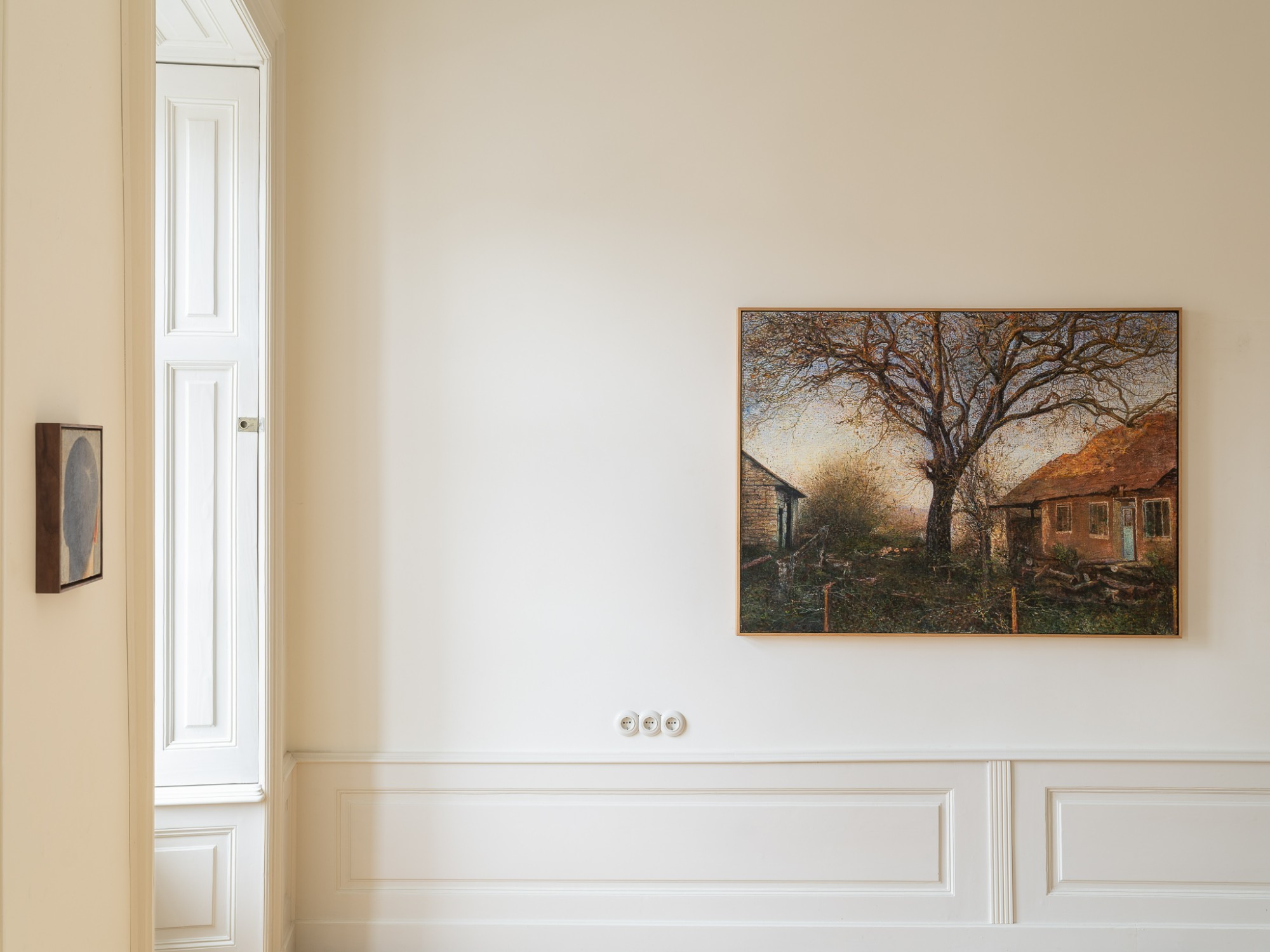
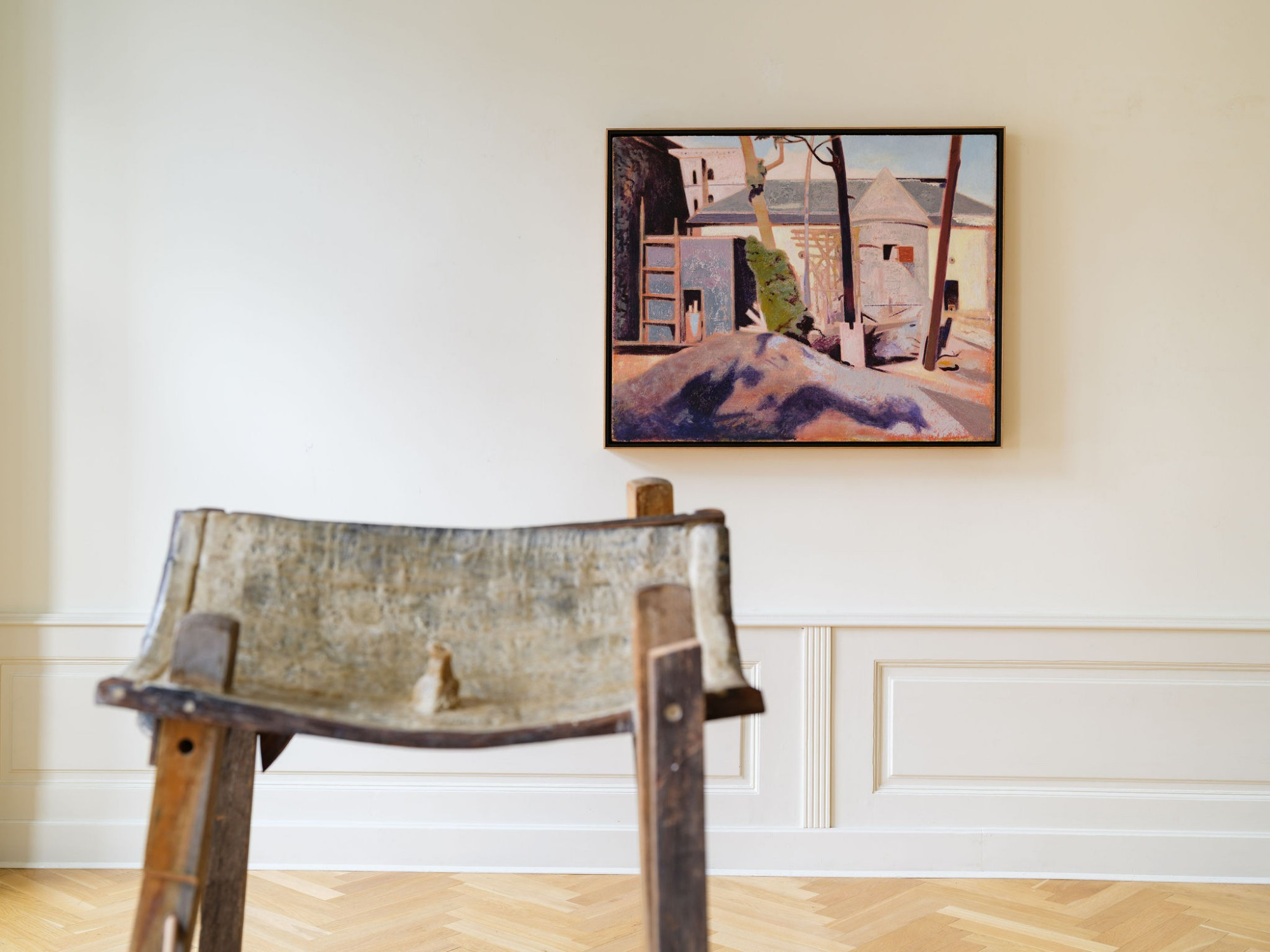
At the opposite pole, Victoria Sadovnic proposes a complementary zone within the sentence, articulating synthesis through landscape and the natural elements that compose its space. The chemistry of the pictorial field—whether pastel or oil—transforms into sensibilities through which mediation becomes experience, and the image turns into a whisper. Whether we encounter nature as a static formation of objects displaced from their original habitat, or an almost abstract condensation of familiar landscapes, Victoria’s works operate as a moment of breathing space within the exhibitionary proposition.
Strangeness defines Miriam Farcaș’s multi-figure compositions, where the predicate of the sentence seems to activate the narrative. Seemingly emerging from a parallel universe, these works amplify a dystopian dimension in which multiple temporal planes collapse into one another. The fantastic introduces a particular accent in combination with the props of a recent past, where satirized archetypes of an extravagant society perform a peculiar routine charged with tension and an appetite for danger, in a world where time merges with space.
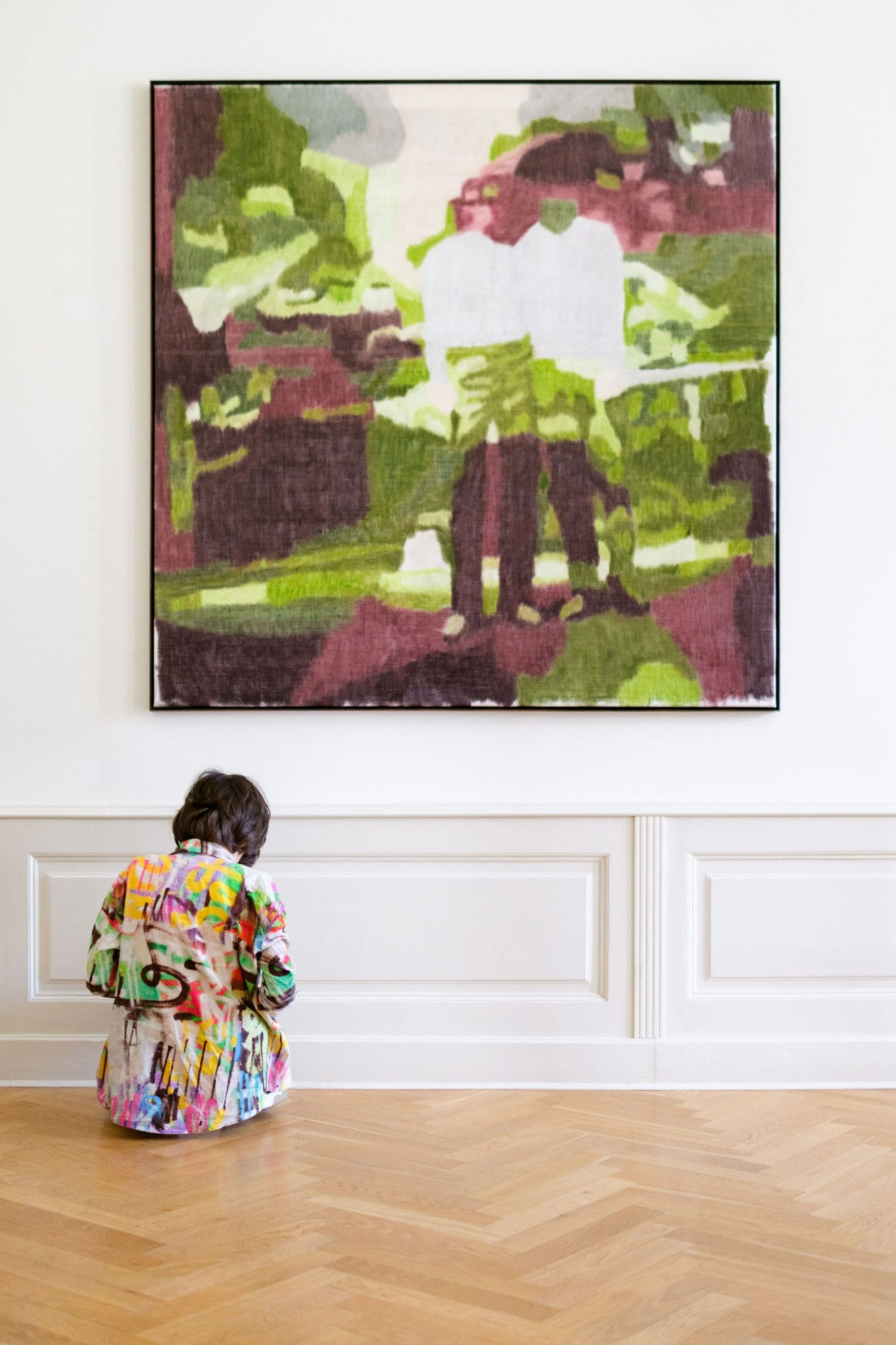
Within a territory that negates the logic of this world, we encounter Ingrid Farcaș’s fantastic weavings, functioning as the subject of the sentence with mythical consistency. Tapestry-painting becomes the primary direction through which she constructs narratives that interlace the real and the imaginary. Figures with mystical traits, animals displaced from their natural habitats, and natural as well as architectural elements merge harmoniously into metaphysical worlds, carefully planned stitch by stitch.
A sentence with four wor(l)ds seeks to affirm this multiplicity within the exhibition corpus. Each practice follows its own logic. Yet these positions build a dialogue grounded not in similarities but in contrasts, akin to the syntactic naturalness of a sentence, where subject, predicate, adjective, and complement operate through an intrinsic relation specific to linguistic logic.